Thursday, November 26, 2015

Our Brains Fall In Love In Less Than A Second; Here’s How:


love-your-brain With this new interesting study that uses functional magnetic resonance imaging, we are now able to see the immediate effects that love has on our brains. Turns out love is actually really good for you!

The time estimated to “fall in love” usually hits us in about one-fifth of a second. Sure, spending 6 months or however else long with that person makes you fall in love even more, but it’s the very beginning that we truly realize we have fallen in love with someone.
Love is so strong at first because of the twelve areas of the brain that are working together while you become entranced by the love process. When this happens, waves of euphoria-inducing chemicals


spread through your brain such as oxytocin, Science-Meditation-Mind-Molecular-Zen-Brainvasopressin, adrenaline, and dopamine.
Essentially, falling in love is almost the equivalent of someone’s addiction to cocaine!
Recent findings from researchers of Syracuse University, West Virginia University and including Geneva University Psychiatric Center had published their retrospectively reviewed pertinent neuroimaging literature within the Journal of Sexual Medicine.

Come to find out in their studies that people who had just fallen in love had extremely higher levels of nerve growth factor. This is a very crucial part of the survival of sympathetic and sensory neurons.

(Via Spiritscience

Wednesday, November 25, 2015

Is Another Human living inside you ?

You may think your body and mind are your own. In fact, you are a fusion of many organisms - including, potentially, another person. Words by David Robson, photography by Ariko Inaoka.


Once upon a time, your origins were easy to understand. Your dad met your mum, they had some fun, and from a tiny fertilised egg you emerged kicking and screaming into the world. You are half your mum, half your dad – and 100% yourself.
Except, that simple tale has now become a lot more complicated. Besides your genes from parents, you are a mosaic of viruses, bacteria – and potentially, other humans. Indeed, if you are a twin, you are particularly likely to be carrying bits of your sibling within your body and brain. Stranger still, they may be influencing how you act.
A very large number of different human and non-human individuals are struggling inside us for control
“Humans are not unitary individuals but superorganisms,” says Peter Kramer at the University of Padua. “A very large number of different human and non-human individuals are all incessantly struggling inside us for control.” Together with Paola Bressan, he recently wrote a paper in the journal Perspectives in Psychological Science, calling for psychologists and psychiatrists to appreciate the ways this may influence our behaviour.

(Credit:Ariko Inaoka)
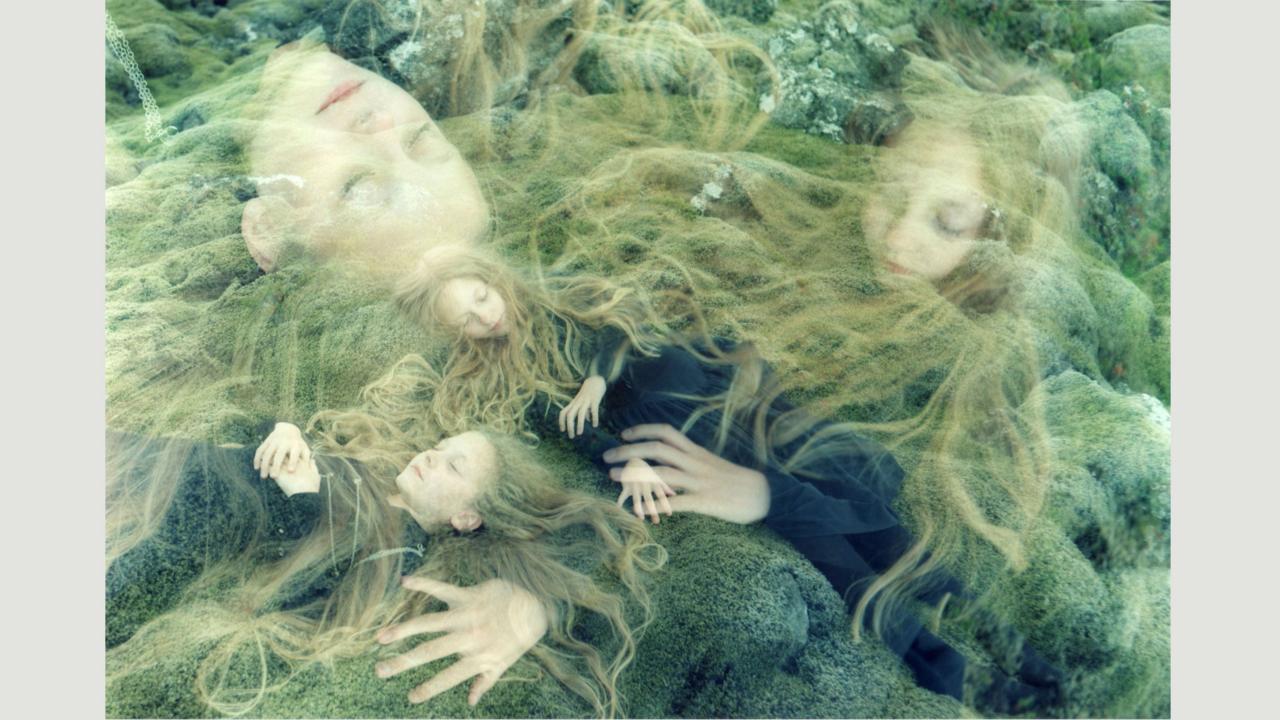
Over the last 6 years, photographer Ariko Inaoka has captured the special connection between two Icelandic twins, Erna and Hrefna (Credit:Ariko Inaoka)

That may sound alarming, but it has long been known that our bodies are really a mishmash of many different organisms. Microbes in your gut can produce neurotransmitters that alter your mood; some scientists have even proposed that the microbes may sway your appetite, so that you crave their favourite food. An infection of a parasite called Toxoplasma gondii, meanwhile, might just lead you to your death. In nature, the microbe warps rats’ brains so that they are attracted to cats, which will then offer a cosy home for it to reproduce. But humans can be infected and subjected to the same kind of mind control too: the microbe seems to make someone risky, and increases the chance they will suffer from schizophrenia or suicidal depression. Currently, around a third of British meat carries this parasite, for instance – despite the fact an infection could contribute to these mental illnesses. “We should stop this,” says Kramer.

Infiltrating siblings
In this light, it becomes clear that our actions are not entirely our own. It’s enough to make you question your sense of identity, but the idea of infiltration becomes even more eerie when you realise that your brain has not just been invaded by tiny microbes – but also by other human beings.
Even non-conjoined twins could be sharing organs without realising it
The most visible example might be a case of conjoined twins sharing a brain, says Kramer, but even regular twins could have shared organs without realising it. During early development, cells can be passed between twins or triplets. Once considered a rare occurrence, we now know it is surprisingly common. Around 8% of non-identical twins and 21% of triplets, for example, have not one, but two blood groups: one produced by their own cells, and one produced by “alien” cells absorbed from their twin. They are, in other words, a chimera – a fusion of two bodies – and it may occur in many organs, including the brain.

(Credit: Ariko Inaoka)
Developing together in the womb, twins may swap cells, making them even closer than we'd previously realised (Credit: Ariko Inaoka)

Brothers from another mother
Women accidentally carrying a "twin's" child
Lydia Fairchild’s paternity test was meant to be straightforward, proving to the courts that her two sons’ father was the person she said he was. When the test came back, however, Fairchild herself came up as a blank: there was no trace of her DNA in her own children.
The courts threatened to convict her of illegal surrogacy – they assumed it was a scam to gain benefits. Luckily, at around the same time, a scientific paper reported a similar case in which a woman was apparently not the biological mother of two of her three children. The reason was that she was a chimera: a case in which two twins had merged into one body early in development. Being the product of two different cell lines, some of her eggs carried a genome that was different from the rest of the body.
Needless to say, the discovery has caused Fairchild to question her own identity. “Telling my sons about this was the hardest part because I felt that part of me hadn't passed on to them,” she told the website Jezebel. “I thought, ‘Oh, I wonder if they'll really feel that I'm not quite their real mother somehow because the genes that I should've given to them, I didn't give to them.’”


A chimera brain could have serious consequences. For instance, we know that the arrangement of different brain regions can be crucial for its function – but the presence of foreign tissue, being directed by different genes carrying a different blueprint, may throw that intricate design into disarray. This may explain, for instance, why twins are less likely to be right-handed – a simple trait that normally relies on the relative organisation of the right and the left hemispheres. Perhaps chimerism has upset the balance.

Even if you do not think you ever had a twin, there are many other ways you might be invaded by another human’s cells. It’s possible, for instance, that you started off as two foetuses in the womb, but the twins merged during early development. Since it occurs at such an early age of development, the cells can become incorporated into the tissue and seem to develop normally, yet they are carrying another person’s genetic blueprint. “You look like one person, but you have the cells of another person in you – effectively, you have always been two people,” says Kramer. In one extreme case, a woman was surprised to be told that she was not the biological mother of her two children (See “Brother from another mother”, left). Alternatively, cells from an older sibling might stay around the mother’s body, only to find their way into your body after you are conceived.

However it happens, it’s perfectly plausible that tissue from another human could cause the brain to develop in unexpected ways, says Lee Nelson from the University of Washington. She’s currently examining whether cells from the mother herself may be implanted in the baby brain. “A difference in the amount, cell type, or the time during development at which the cells were acquired could all result in abnormalities,” she says.

Nelson has found that even as an adult, you are not immune from human invaders. A couple of years ago, Nelson and William Chan at the University of Alberta in Edmonton took slices of women’s brain tissue and screened their genome for signs of the Y-chromosome. Around 63% were harbouring male cells. “Not only did we find male DNA in female human brains as a general observation, we found it to be present in multiple brain regions,” says Chan. In other words, their brains were speckled with cells from a man’s body. One logical conclusion is that it came from a baby: somehow, her own son’s stem cells had made it through the placenta and lodged in her brain. Strangely, this seemed to decrease the chances that the mother would subsequently develop Alzheimer’s – though exactly why remains a mystery. Some researchers are even beginning to wonder whether these cells might influence a mother’s mindset during pregnancy.

(Credit:Ariko Inaoka)

Our knowledge of the human “superorganism” is still in its infancy, so many of the consequences are purely theoretical at the moment. Kramer and Bressan's aim with their paper was not to give definitive answers, but to enlighten other psychologists and psychiatrists about the many entities that make us who we are today. “We cannot understand human behaviour by considering only one or the other individual,” Kramer says. “Ultimately, we must understand them all to understand how ‘we’ behave.”

For instance, scientists often compare sets of twins to understand the origins of behaviour, but the fact that even non-identical twins may have swapped bits of brain tissue might have muddied those results. We should be particularly careful when using these twin studies to compare conditions such as schizophrenia that may arise from faulty brain organisation, Bressan and Kramer say.

In general, however, we shouldn’t feel hostile towards these invaders – after all, they made you who you are today. “I think it is now clear that our natural immigrants are with us for the long-term, for better or for worse,” says Nelson. “And I would think “for better” outweighs ‘for worse’.”

Source : BBC 

Why We Should Stop worrying about Our Wandering Minds

Daydreaming has a bad reputation, but neuroscientists are beginning to realise that a wandering mind is not only typical – it might be beneficial.


Sit down, relax and think of nothing. Struggling? There might be a good reason why your mind seems to wander even when you try very hard to switch off: your brain never really rests. And contrary to popular belief, those idle daydreams might even be beneficial.
For years, neuroscientists worked on the assumption that our brains work hard when given a specific job to do, and switch off when we’re not mentally stimulated. This is why you’ll read about experiments in which volunteers perform a task – tapping a finger, performing some mental arithmetic, looking at evocative pictures – while their brain is scanned. The scan reveals which parts of the brain become more active during the task and which become less active. In this way it is possible to work out how our brain controls our behaviour. 

The brain is never really doing nothing (Ka-Ho PANG/Flickr/CC BY 2.0) (Credit: Ka-Ho PANG/Flickr/CC BY 2.0)
The brain is never really doing nothing (Ka-Ho PANG/Flickr/CC BY 2.0)

The big question is: why is the idling brain so active?
Often the neuroscientists want to explore brain activity for a number of different tasks, so they need a way of getting the brain back to a neutral state between tests. This is typically done by asking the person to stare at a simple white cross in the middle of a black screen. By thinking about nothing in particular, the theory goes, the brain should basically switch off.
There is just one problem: it doesn’t.
The first sign that a resting brain is surprisingly active came two decades ago. A student called Bharat Biswal was studying for a PhD at the Medical College of Wisconsin in Milwaukee. He was investigating ways to get a purer signal from a brain scanner, when he noticed that the resting brain isn’t doing nothing. Even when people were told to clear their minds or to stare at a cross, activity in the brain continued. Not only that, the brain scans seemed to reveal this activity was actually coordinated.

Idle network
Then in 1997 an analysis incorporating the results of nine brain scan studies revealed another surprise. Gordon Shulman hoped his analysis would help identify the network that comes to life when people pay attention. But he discovered the opposite – the network which is activated when we do nothing.

(Credit: Getty Images)
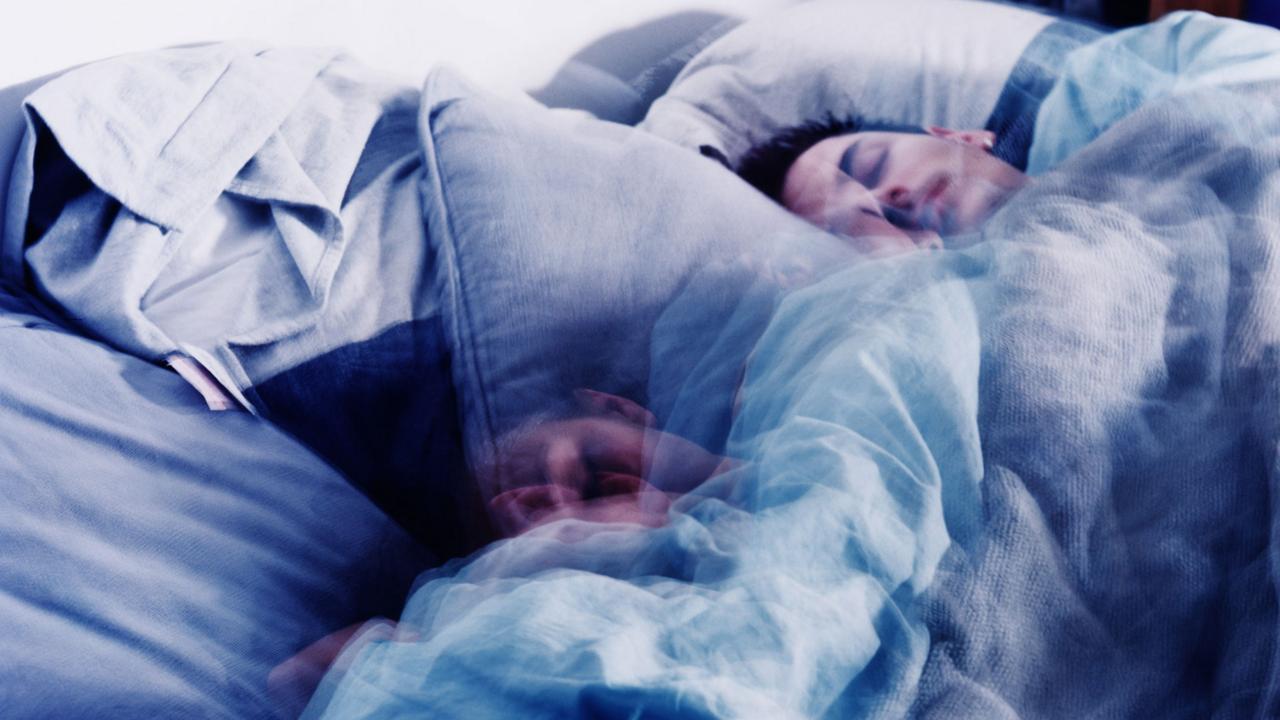
A lot happens inside our skulls when we sleep, but also when we're resting when awake too (Credit: Getty Images)

It would make sense for the brain to become more active when volunteers shifted from resting to performing a task. Instead, Schulman noticed that some areas of the brain consistently became less active when the resting period ended and the activity began. This suggested that while people were lying quietly in the scanner supposedly doing nothing, parts of their brains were in fact more active than when the volunteers were actively performing a task.
It took a while for the idea that the brain never rests to catch on. For years neuroscientists had thought that brain circuits switched off when they weren’t needed. In 1998 the neuroscientist Marcus Raichle, now one of the leaders in the field, even had a paper rejected by a referee who said the apparent activity must surely be down to an error in the data.

(Credit: SPL)
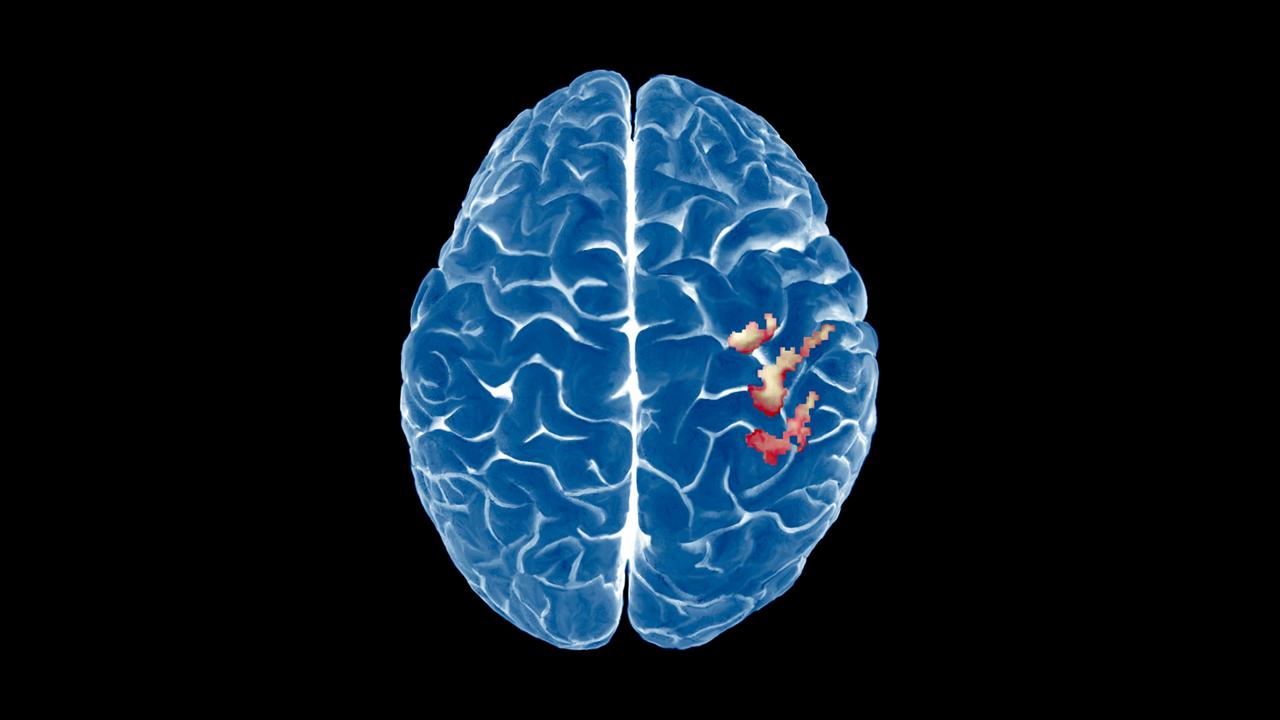
To the surprise of scientists, the brain lit up inside scanners when people were doing nothing (Credit: SPL)

Today things are very different. Almost 3000 scientific papers have been published on the topic of the brain’s surprisingly busy “resting state”. Some object to this term for the very reason that the brain isn’t resting at all. They prefer instead to talk about the “default mode network” – the areas of the brain which remain active while we are apparently idle.
Daydreaming essentially creates memories of events that haven’t happened


How do you rest?
Answer in this global survey

Take part in The Rest Test, a survey of what people around the world think about rest. Which activities do you find restful and do you get enough time to rest? How much does the mind wander when you are resting?
The survey is part of a Wellcome Collection collaboration with BBC Radio 4. Claudia Hammond, the author of this story, is part of a group of people from disciplines as diverse as medieval history, musical composition, neuroscience and poetry, who are in residence at the Wellcome Collection in London investigating what rest really means. 
The big question is: why is the idling brain so active? There are plenty of theories, but no agreement yet. Maybe different brain areas are simply practising working together. Perhaps the brain is staying active like an idling car, just in case it needs to act suddenly. But it’s possible that those mind wanderings and replays of our day play a vital role in helping us to consolidate our memories. We know that our dreams seem to play a part in sorting out our memories – now there is evidence that it happens during the day too (in rats, at least).
We also know that when the mind is left to wander, it often focuses on the future. We start thinking about what we’re going to eat in the evening or where we’re going to go next week. All three of the chief areas of the brain involved in imagining the future are part of the default mode network. It is almost as though our brain is programmed to contemplate the future whenever it finds itself unoccupied.
Moshe Bar from Harvard Medical School thinks there might be a very good reason for that. He believes daydreaming essentially creates memories of events that haven’t happened. This gives us a strange set of “prior experiences” we can draw on to help us decide how to act if the daydreams ever do come to pass. For instance, many air travellers have wondered what it might be like to crash. Bar’s idea is that if the plane did actually crash, the memories of all those daydreams from previous flights would come into play and help the passenger decide how to behave.

(Ana C/Flickr/CC BY 2.0) (Credit: Ana C/Flickr/CC BY 2.0)
What do you daydream about? (Ana C/Flickr/CC BY 2.0)

But the resting state is not easy to investigate. As some cognitive psychologists have pointed out, just because a person is lying in a scanner we can’t be sure that they are alone in their thoughts, introspecting. They could be thinking about the sounds of the scanner and what’s happening around them. For this reason there are still plenty of unanswered questions about mind wandering. For instance, are the daydreams we experience when we’re trying – and failing – to focus on our work different from the ones we have when we’re deliberately trying to switch off?
Unique idleness
Progress is being made, though. A study published earlier this year hinted that we might all experience the resting state in a slightly different same way. Researchers conducted a detailed brain scan study of five people who had been trained to recount their mind wanderings in detail every time they heard a computer beep. The researchers found considerable differences between each person’s daydreaming thoughts and experiences.

(Credit: Samuel Johnson/Flickr/CC BY 2.0)
When the mind is left to wander it often focuses on the future (Credit: Samuel Johnson/Flickr/CC BY 2.0)

In September researchers at the University of Oxford used scans from the Human Connectome Project of 460 people’s brains in a resting state to explore which parts of the brain communicate with each other when we are at rest. Again, the results hinted at personal differences in the resting state – this time linked to life skills and experiences. The strength of the connections between different parts of the brain varies with the strength of a person’s memory, their years of education and their physical endurance. It is as though parts of the brain remain connected when our mind wanders just in case we need them to do something.
The discovery of the resting state also has the potential to change the way we each feel about our brains
Scientifically, the discovery that the brain is never truly at rest could help make sense of a longstanding mystery: why does the brain uses 20% of body’s energy when the activities we know it performs should need only need about 5%? Marcus Raichle has labelled the missing 15% the brain’s “dark energy” – resting state activity might account for some of this discrepancy.
The discovery of the resting state also has the potential to change the way we each feel about our brains. We know how hard it is to empty our minds. We know how our minds have a frustrating tendency to wander even when we don’t want them to. But the emerging picture suggests these quirks might actually be beneficial – even if they do prevent us from finishing a task in time to meet a deadline. In other words, perhaps it’s time to celebrate the virtues of an idle mind.

Source : BBC